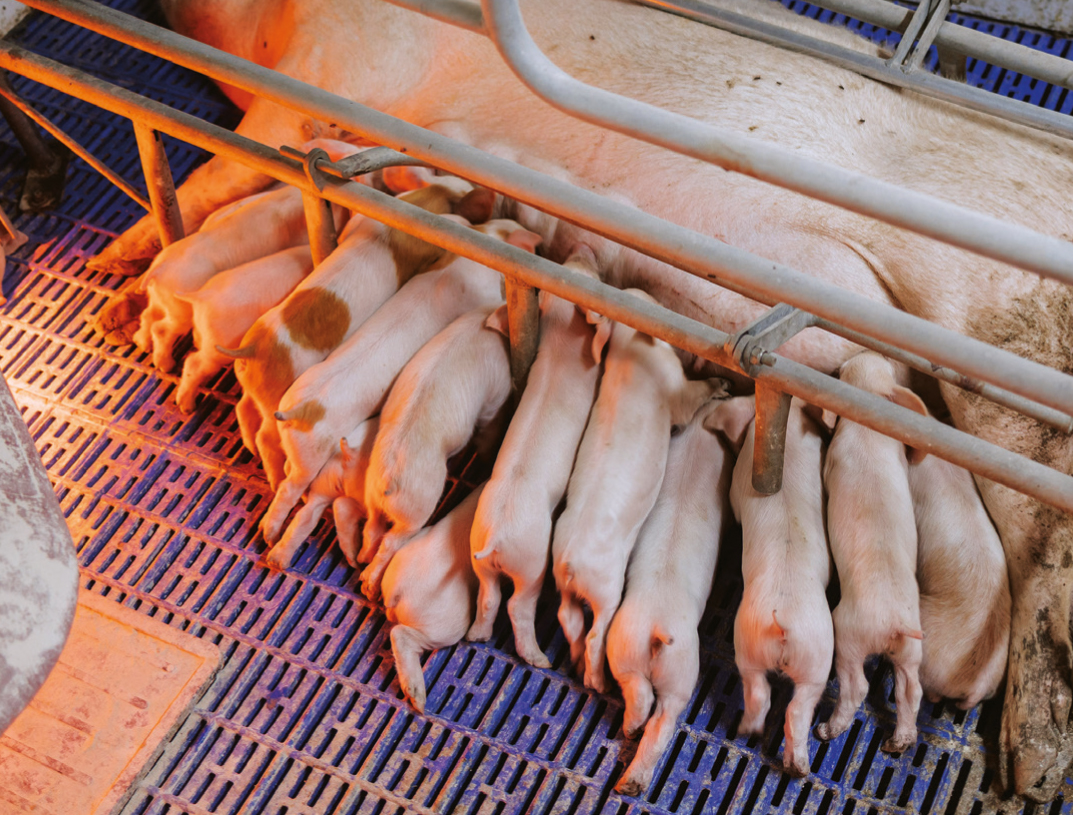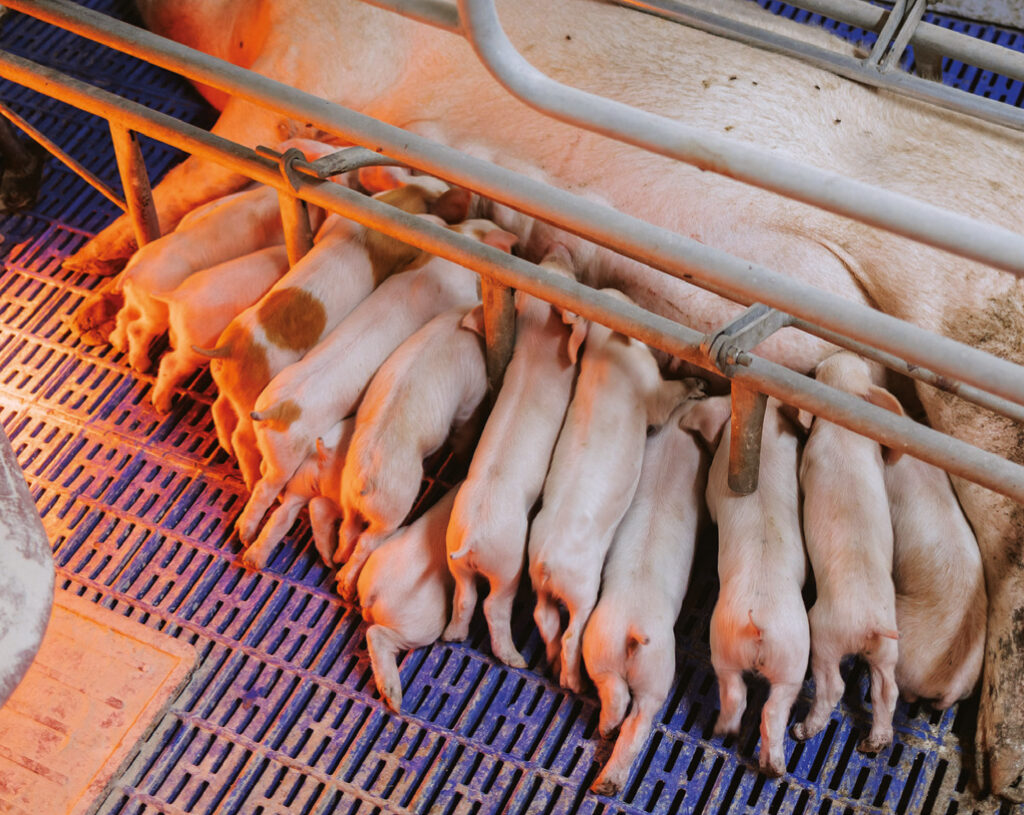
Over the past 10–15 years, significant changes have taken place in pig production, bringing the industry to a new and more intensive level. As has been repeatedly mentioned in numerous publications, the key driving factor behind this development has been the substantial increase in sow prolificacy. As a result, the main challenge is no longer how to obtain as many piglets as possible from a sow, but rather how to save all of them and provide an adequate source of nutrition. After all, no sow is capable of supplying enough milk for 16–20 newborn piglets.
In response to this challenge, feed companies began developing so-called milk replacers, designed to compensate for the sow’s insufficient milk supply. Initially, all milk replacers contained the maximum possible amount of dairy components, as the aim was to bring their composition as close as possible to sow’s milk. Of course, it is still technologically impossible to fully replicate sow’s milk, and such a milk replacer does not yet exist. Nevertheless, significant progress has been made, resulting in substantially improved piglet survival and growth rates before weaning, as well as a significant reduction in the use of foster sows.
Later, in the search for better solutions, and as a result of significant changes in European legislation, including restrictions on the use of zinc oxide and copper and the ban on antibiotics, swine nutritionists began incorporating plant-based ingredients into milk replacers.
The purpose of this approach was to stimulate the piglets’ digestive enzyme system to digest the same ingredients that are present in the feeds provided after weaning. During this development process, liquid milk prestarters or yogurts gradually emerged. These are products that are similar to milk replacers in terms of their organoleptic and physical properties, but their higher content of plant-based ingredients makes them more similar to dry prestarter feeds.
Naturally, this type of product cannot provide the same effect as a milk replacer when used from birth because its composition is different. However, when a liquid milk prestarter is used during the second half of the suckling period, it becomes a powerful tool not only for improving piglet performance before weaning but also for minimizing nutritional stress at weaning.
Based on these developments, and taking into account the latest trends and practical developments in pig production over the past 5–6 years, two liquid milk feeding programs for piglets in the farrowing unit have emerged:
- One-phase program — using only a milk replacer from day 3 of life until weaning.
- Two-phase program — using a milk replacer during the first phase, i.e. during the first half of the suckling period, approximately until day 12 of life, followed by a liquid milk prestarter during the second phase, from day 12 until weaning.
Both one-phase and two-phase feeding programs are successfully used in commercial pig production, and each farm chooses the approach that best suits its conditions, management level, staff qualifications, as well as the goals and objectives of the farm manager or owner.
So, what is the difference between the two programs, and which one is better? Is it enough to use only a conventional milk replacer? Or should a liquid milk prestarter also be included?
To better understand this, it is necessary to take a closer look at the differences between these products — more specifically, their ingredients, nutritional value, expected effects, and whether these effects match the farm’s objectives.
As mentioned above, a typical milk replacer is a product with a high content of dairy ingredients. In some cases, milk replacers contain no plant-based ingredients at all, apart from fat, as the fat source is usually coconut or palm fat. However, in many cases, milk replacers contain a small amount of plant-based ingredients, such as soy and cereal components.
The presence of a small amount of plant-based ingredients should not be considered an indicator of lower product quality. Rather, it is a strategy that allows piglets to begin developing their gastrointestinal tract at an early age. In most cases, however, the proportion of dairy ingredients in milk replacers exceeds 75%.
Liquid milk prestarters, on the other hand, are essentially the opposite of milk replacers, although their organoleptic characteristics may be very similar. They usually contain a relatively high proportion of dairy ingredients compared with dry prestarter feeds, but significantly less than a typical milk replacer. The proportion of dairy ingredients in liquid prestarters is usually below 50%.
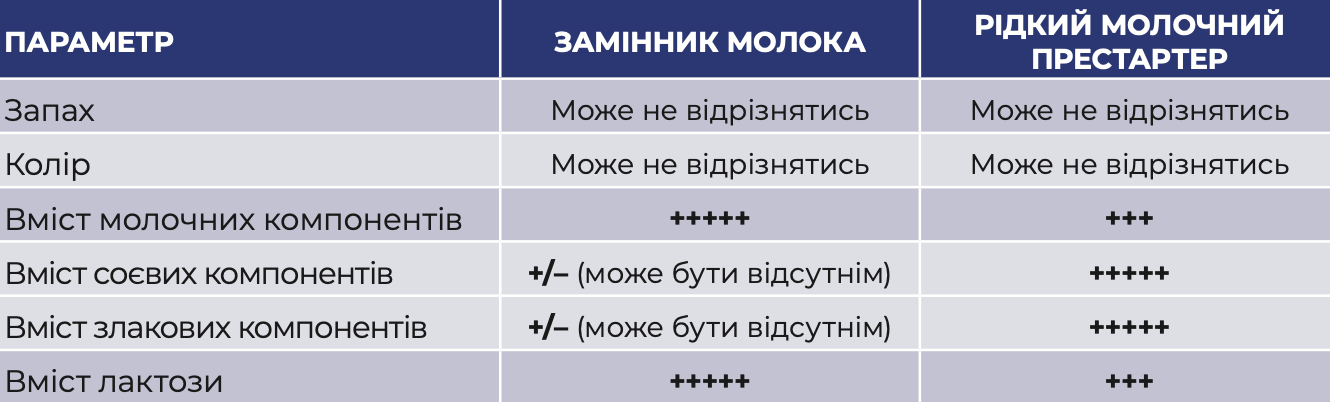
It should be noted that liquid milk prestarters are often mistakenly perceived as the same product as a milk replacer, but of lower quality because they contain a higher proportion of plant-based ingredients intended to reduce costs. As a result, it is assumed that they may lead to somewhat lower growth rates before weaning.
However, plant-based ingredients are not included “for the purpose of reducing costs.” Naturally, when a product contains a high proportion of dairy ingredients, feeding a milk replacer from birth until weaning may potentially result in higher piglet growth rates. But in this case, we achieve only one objective — improving piglet quality at weaning.
On the other hand, the digestive enzyme system will be adapted primarily to digest dairy ingredients because, in most cases, dry feed intake before weaning is insufficient. As a result, we may obtain piglets with the desired body weight, but at the same time trigger significant nutritional stress during the first week after weaning.
Therefore, the introduction of a liquid milk prestarter is an effective way to train the digestive enzyme system. Naturally, as mentioned above, this product is not recommended from day 3 of life because its composition and nutritional profile do not meet the requirements of piglets during this period.
However, when used as part of a two-phase feeding program — after day 12 of life and following an initial period of milk replacer feeding — a liquid milk prestarter becomes a powerful tool for achieving performance targets before weaning and for supporting piglets during the weaning transition.
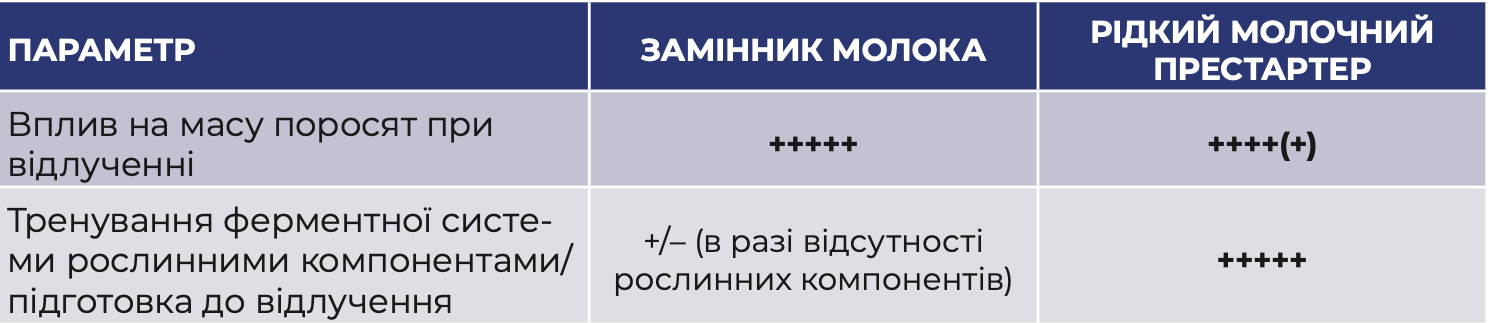
Thus, these two products have different functional purposes and cannot replace one another when the goal is to achieve maximum results on a pig farm. Based on the above, the following conclusions can be drawn:
- The purpose of a milk replacer is to support maximum growth before weaning.
- The purpose of a liquid milk prestarter is to support maximum growth after day 12 of life and effectively prepare the digestive enzyme system for weaning.
Accordingly, when discussing feeding programs, the following can be stated:
- with a one-phase feeding program based exclusively on milk replacer throughout the suckling period, we can achieve maximum piglet performance before weaning;
- with a two-phase feeding program — milk replacer until day 12 of life, followed by a liquid milk prestarter — we can achieve high body weight and uniformity while also providing significantly better development of the piglets’ digestive enzyme system by the time of weaning.
This point is particularly important because, in commercial pig production, it is often observed that the heaviest piglets at weaning — those that had the best access to sow’s milk — cope with the weaning process less effectively than piglets that had less access to milk and consumed more plant-based feeds, such as dry prestarter feed.
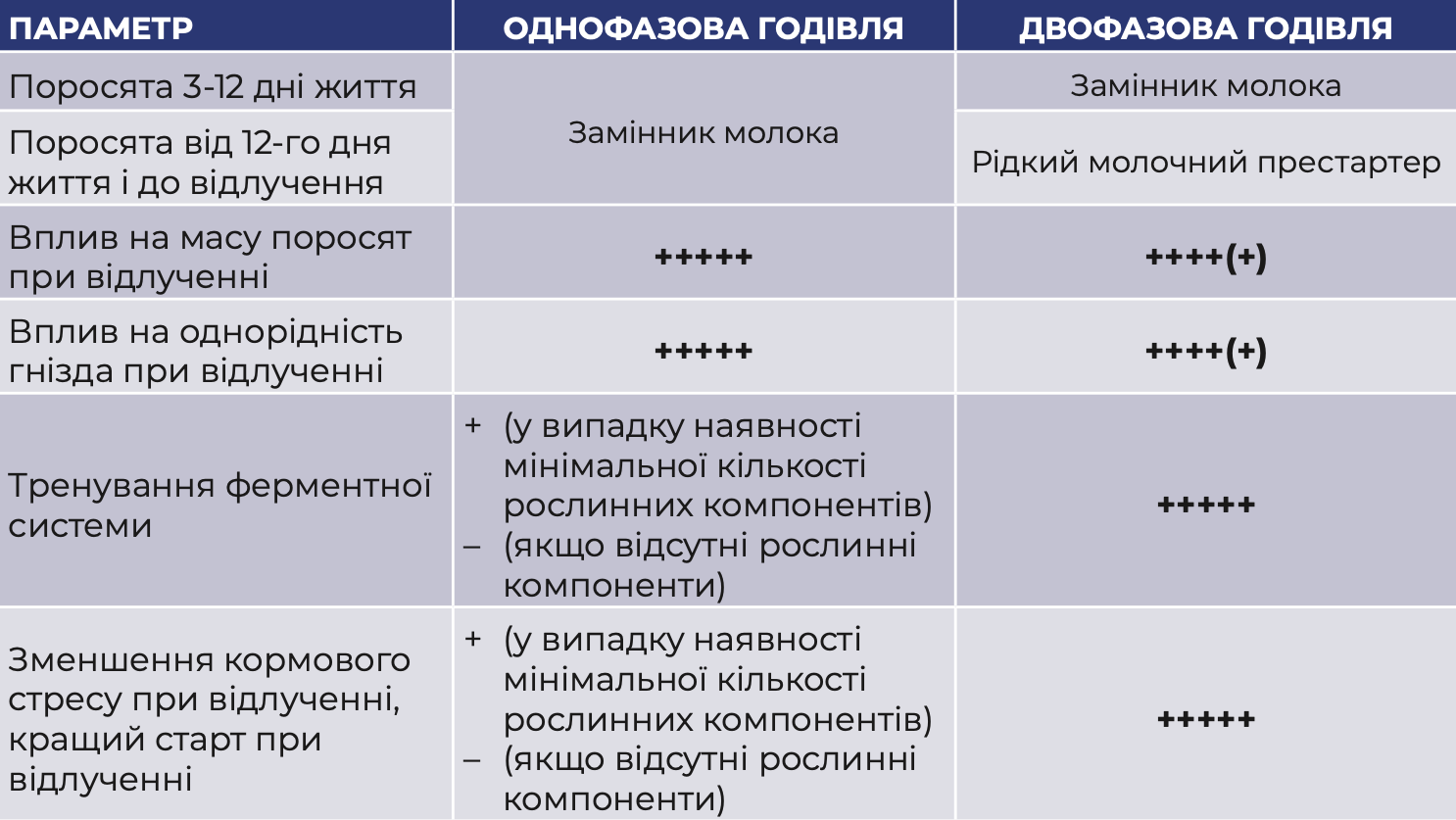
Naturally, both one-phase and two-phase feeding programs can be effectively used depending on the specific situation. It is up to each farm to determine which option is best suited to its piglets and production conditions. For guidance, the following recommendations can be used when choosing a strategy.
A one-phase feeding program (milk replacer only) is preferable in the following situations:
- The farm specializes exclusively in the sale of weaned piglets, which is more common in Western Europe and less common in Ukraine. In this case, the farm is focused primarily on results up to weaning.
- There is a high level of dry prestarter feed intake before weaning, meaning that the piglets’ digestive enzyme system is already sufficiently developed.
- Piglets experience little or no nutritional stress or diarrhea at weaning.
- There is a shortage of labor in the farrowing unit, as a one-phase feeding program requires less attention and time from staff.
A two-phase feeding program using liquid milk products is preferable when:
- The farm operates a complete production cycle. In addition to obtaining high-quality litters at weaning, the farm also needs the weaning process to run smoothly, which can contribute to faster transfer to the finishing stage and a shorter finishing period.
- Prestarter feed intake before weaning is low, meaning that additional stimulation of plant-based ingredient intake by the piglets’ gastrointestinal tract is required.
- There is an elevated incidence of diarrhea at weaning and significant nutritional stress, which in many cases is associated with insufficient development of the gastrointestinal tract and digestive enzyme system.
- Sufficient labor is available, as the program requires feeding two different products depending on the piglets’ age.
- The farm aims to reduce the use of antibiotics and zinc oxide during the weaning period.
Thus, both strategies can be successfully applied, and the final choice should be made by the farm management based on its specific conditions and production objectives.