Colostrum is the first and most important food in a calf’s life. Colostrum is an incredible mixture of immunoglobulins, biologically active substances, and nutrients that provide a vital start to a calf’s life.
The main task of colostrum is to provide passive immunity, which is the only source of early immunity for calves due to the inability of the bovine placenta to transfer maternal immunoglobulins to the fetus (Richter and Götze, 1993; Baintner, 2007).
The immune status of calves during the milk period depends directly on the quality and quantity of colostrum the calf receives during the first hours of life (Heinrichs and Elizondo-Salazar, 2008). The transfer of immunoglobulins from colostrum provides temporary protection against infectious diseases, reducing the risk of mortality and morbidity in calves (Godden та ін., 2009). Furthermore, a sufficient amount of high-quality colostrum ensures greater weight gain, an earlier age at first calving, and increased milk production in the future (Robison et al., 1988, Faber et al., 2005).
Therefore, it is very important to ensure that calves are fed high-quality colostrum in a timely manner, as about one-third of calf deaths in the first 3 weeks of life are related to mistakes in colostrum management.
Despite the advantages mentioned above, colostrum is a potential source of pathogens for newborn calves. Microorganisms can enter colostrum through secretion from the mammary gland, contamination during milking, storage, or feeding, or through bacterial proliferation in stored colostrum (Fecteau et al., 2002; McGuirk and Collins, 2004; Johnson et al., 2007). Salmonella spp., Escherichia coli, Mycobacterium avium ssp. paratuberculosis, Mycoplasma spp. and the bovine leukemia virus are just a few of the pathogens that can be isolated from colostrum (Ferrer and Piper, 1981; Streeter et al., 1995; González and Wilson, 2003; Houser et al., 2008).
In addition, some studies have reported that high concentrations of bacteria in colostrum may cause reduced absorption of immunoglobulins, which could potentially lead to a failure in the passive transfer of immunity (James et al., 1981; Poulsen et al., 2002; Godden et al., 2012), because bacteria can bind to nonspecific receptors on enterocytes, thereby reducing the number of receptors available for IgG uptake (Staley and Bush, 1985).
A large-scale study conducted in the United States (Morrill et al., 2012) showed that many colostrum samples collected from various regions of the country had significantly higher levels of bacterial contamination than recommended. In 45% of the colostrum samples tested from 76 herds (n=746), the total bacterial count was >100,000 CFU/mL, and in 17% of the samples, it exceeded 1,000,000 CFU/mL. The authors noted that, in addition to variations in IgG content, there are significant hygiene issues during milking, storage, and feeding of colostrum, which creates a potential risk of pathogen transmission to calves.
Heat treatment (pasteurization) is one way to reduce the number of bacteria in colostrum. Numerous studies have shown that heating colostrum to 60 °C and holding it at that temperature for 60 minutes results in a significant reduction in the number of bacteria, without a significant decrease in IgG concentration
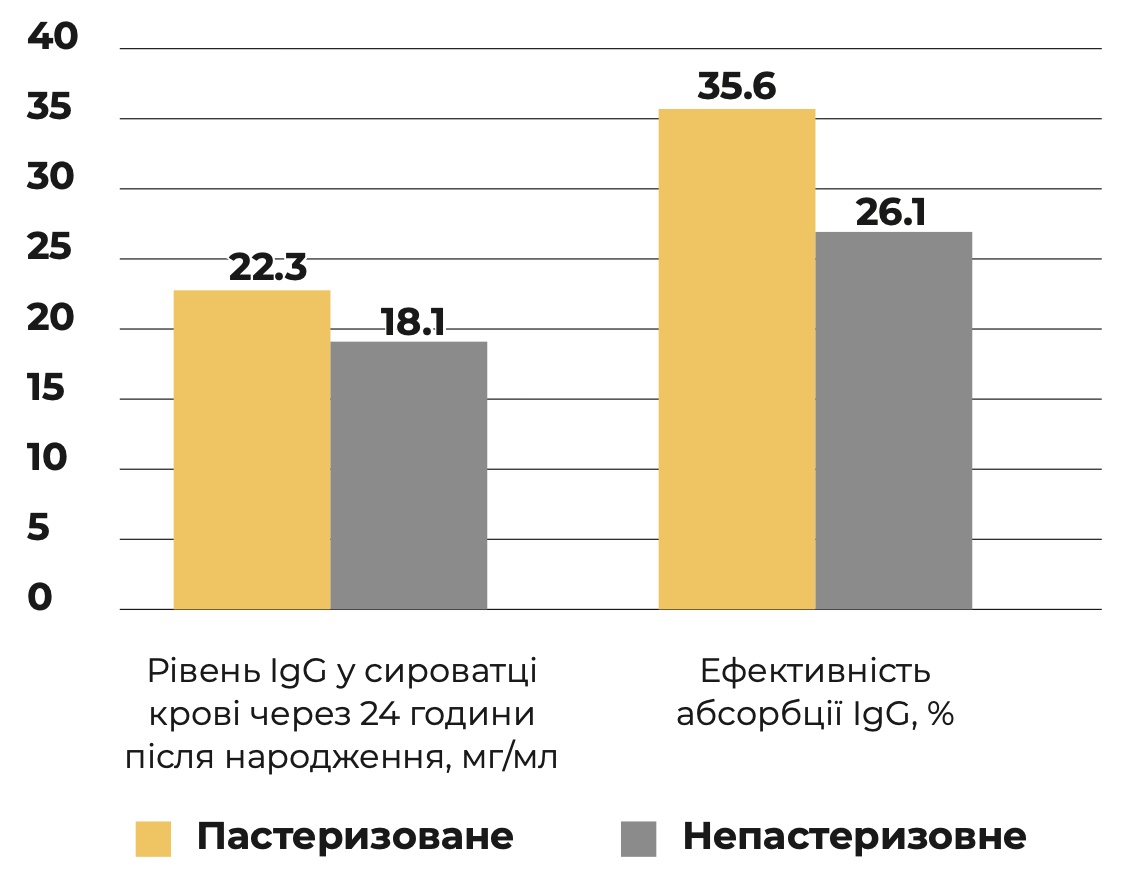
Johnson and colleagues (Johnson et al., 2007) investigated the effect of pasteurizing colostrum on its bacterial and immunoglobulin content, as well as on their absorption by calves. For the study, a batch of colostrum was collected and mixed; one portion was used without heat treatment, while the other was pasteurized at 60 °C for 60 minutes. They found that pasteurization of the colostrum reduced the number of bacteria in it without significantly lowering the IgG concentration. Calves fed pasteurized colostrum had significantly higher concentrations of total protein and IgG in their blood serum 24 hours after birth, as well as greater IgG absorption efficiency, compared to calves fed unpasteurized colostrum (Fig. 1).
Sandra Godden and her colleagues (2012) conducted a study to determine the effectiveness of pasteurizing colostrum and its use in more than 1,000 calves. After pasteurization, the total bacterial count and the number of coliform bacteria decreased significantly, while the IgG level did not decrease significantly (Tab. 1).

They found that the serum IgG levels in calves (blood samples were collected on the 4th day of life) that were fed pasteurized colostrum were 14% higher than those in the control group, which was fed “fresh” colostrum (18.0 and 15.4 mg/mL, respectively).
Based on the results of their research, the researchers also calculated the probability of disease occurrence in calves (Fig. 2).
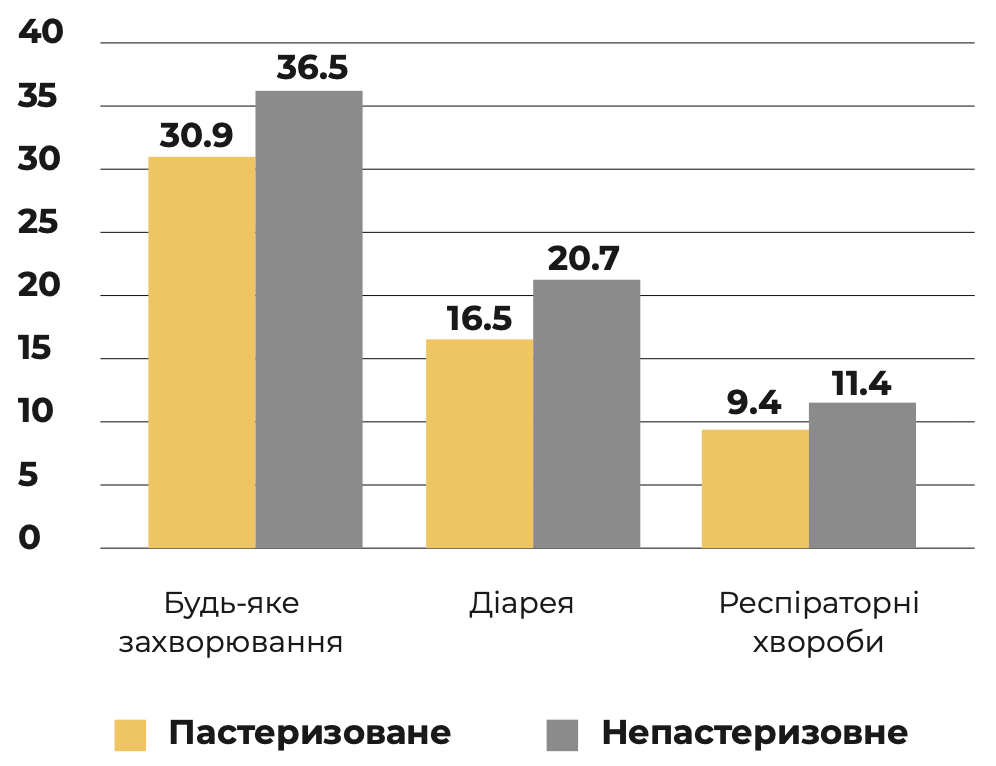
The analysis showed a lower risk of developing any disease among calves fed pasteurized colostrum (30.9%) compared to calves fed “fresh” colostrum (36.5%).
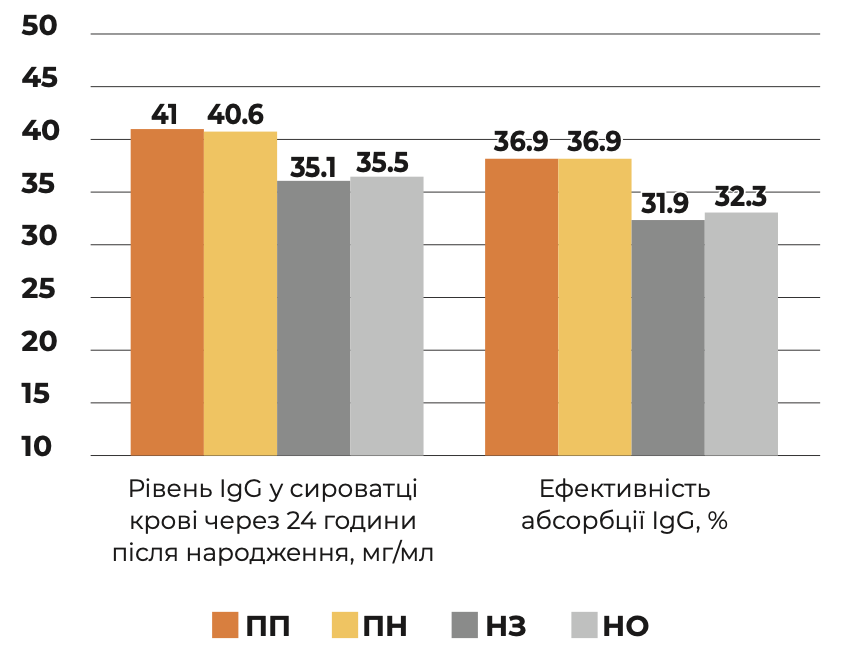
Another study (Kryzer et al., 2015), conducted on Jersey calves, obtained similar results. As in the previous experiments described, equipment from DairyTech Inc. was used for pasteurization. The authors compared the effects of using colostrum pasteurized in special disposable Perfect Udder bags or in a “batch” pasteurizer with unpasteurized colostrum. After pasteurization (regardless of the method), the colostrum was frozen in Perfect Udder bags. “Fresh” colostrum was either chilled or frozen. The calves were divided into four groups based on how the colostrum they were fed was processed: pasteurized in a bag (ПП); pasteurized not in a bag (ПН); unpasteurized frozen (НЗ); and unpasteurized chilled (НО).
The pasteurization process had almost no effect on the IgG level in colostrum; it decreased by only 2% (from 79.2 to 77.7 mg/mL). Meanwhile, the number of coliform bacteria decreased from 3.8 log10 CFU/mL to 0.2 (ПП) and 1.2 (ПН), respectively.
Serum IgG levels and the efficiency of their absorption were higher in calves that received pasteurized colostrum (Fig. 3).
In addition to confirming once again the positive effect of pasteurizing colostrum on IgG absorption, the researchers found no significant difference in the absorption of immunoglobulins from unpasteurized, chilled, or frozen colostrum.
Most researchers say that the mechanism behind the increased absorption of IgG after pasteurization is that the reduced number of microorganisms in the intestinal lumen allows them to be absorbed more effectively during the first hours of life.
The results of a series of experiments show that calves fed pasteurized colostrum have:
- a lower incidence of diarrhea and pneumonia;
- lower mortality rate during the first 30 days of life;
- greater weight gain.
The decline in morbidity is due not only to more effective transmission of passive immunity, but also to a reduction in the number of pathogens entering the body in the first hours after birth.
Scientific and practical research confirms that the optimal heating regimen is a moderate one at 60 °C for 60 minutes, during which:
- most bacteria are effectively eliminated;
- more than 90% of IgG’s biological activity is preserved;
- there is no protein coagulation or loss of colostrum viscosity.
At higher temperatures (63–70 °C), there is a risk of protein denaturation; therefore, such settings are not recommended.
The Ukrainian market has recently seen the introduction of equipment for pasteurizing colostrum, which has been tested and confirmed its effectiveness in numerous scientific studies, including those mentioned in this article.
The Matilda® colostrum thawing/warming system with pasteurization function is designed to make colostrum management simpler, safer, and more efficient for both calves and staff. Matilda® is a revolutionary solution in colostrum management.
BENEFITS OF MATILDA®
- Weatherproof Button Interface: Two robust, weatherproof buttons: one to select the desired program and another to start, stop, or cancel the process. This simplified interface reduces errors and eliminates the maintenance issues associated with touchscreens in damp, challenging environments.
- Simplified Colostrum Management for Employees: Matilda® is engineered to simplify life for your employees, streamlining colostrum management while reducing the risk of errors. Alerts notify workers when the process is complete, allowing them to focus on other tasks without constantly monitoring equipment.
- Brushless Motor: Equipped with a brushless motor, Matilda® delivers higher efficiency, lower maintenance, and precise control-ensuring consistent performance and a longer lifespan even under tough farm conditions.
- App-Controlled Settings: ll settings and adjustments are managed through the updated Perfect Udder® app, putting full control at your fingertips. Adjust temperatures, monitor cycles, receive alerts, and troubleshoot directly from your smartphone, ensuring that employees follow approved protocols without unauthorized adjustments.
Feeding pasteurized colostrum to calves improves their health and, as a result, their development and growth. However, it is important to use only specialized and proven equipment for pasteurizing colostrum and to strictly follow the protocols.